District Spotlight
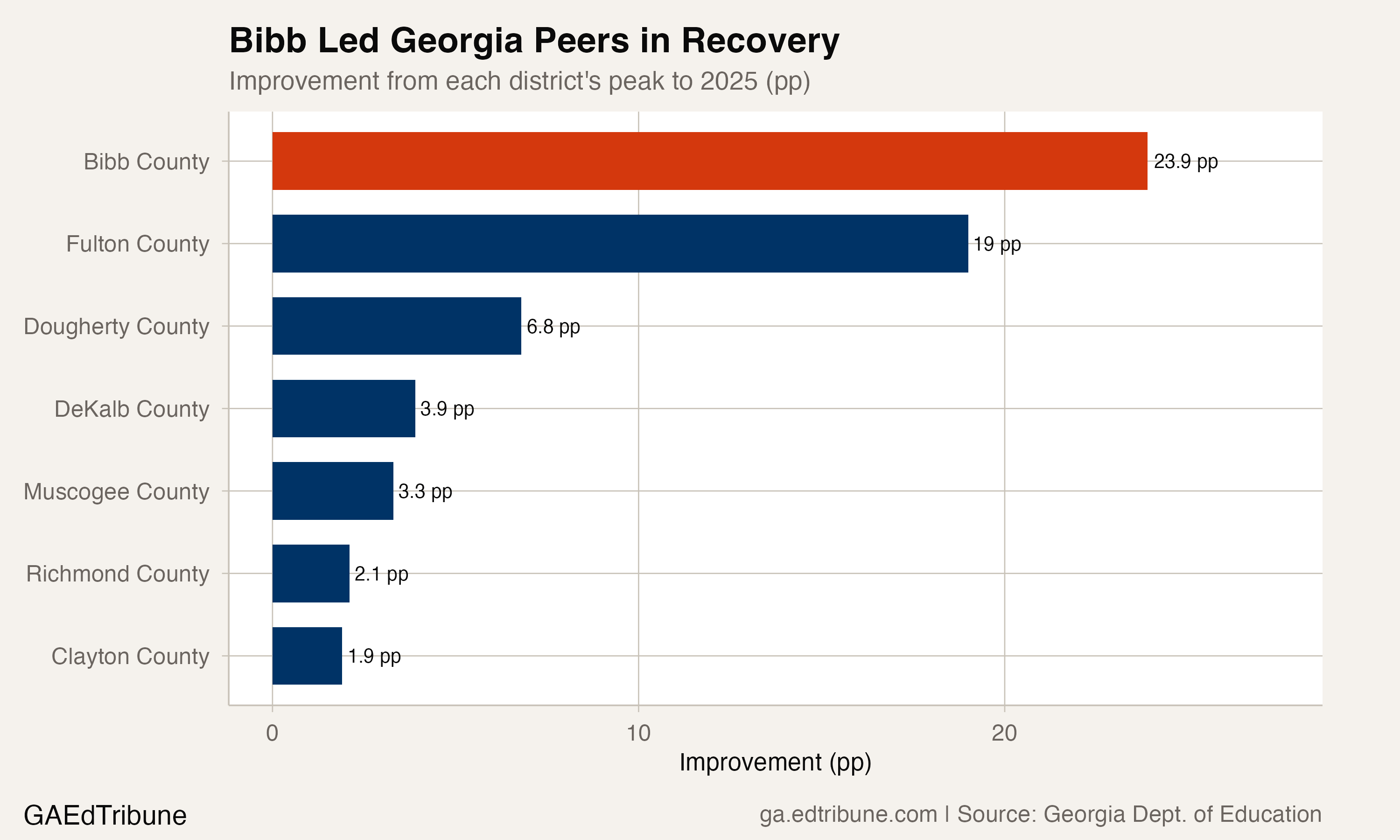
Bibb County Cut Chronic Absenteeism 23.9 Points From Its Peak
Bibb's chronic absenteeism rate fell from 53.7% in 2021 to 29.8% in 2025, the largest peak-to-current improvement among 68 sizable Georgia districts.
Peach State Education Coverage, Driven by Data
Education News & Data
Local education reporting from every corner of Georgia, grounded in Georgia Department of Education data.
Noel Cochran, a Hall County native who spent a decade in the district before leading Tesnatee Gap Elementary, is now principal at North Hall Middle School, which recorded 812 students in 2025-26.
Forsyth County's chronic absence rate fell to 8.7% while Atlanta improved to 31.9%, leaving a 23.2-point gap in 2024-25.
SB 123 bans absence-only expulsions and mandates intervention teams, but 199 of 231 districts already exceed the 10% chronic absenteeism threshold that triggers the law.
DeKalb County's graduation rate rose to 81.6% in 2025, yet it ranked last in a six-district Metro Atlanta comparison.
Bibb's chronic absenteeism rate fell from 53.7% in 2021 to 29.8% in 2025, the largest peak-to-current improvement among 68 sizable Georgia districts.
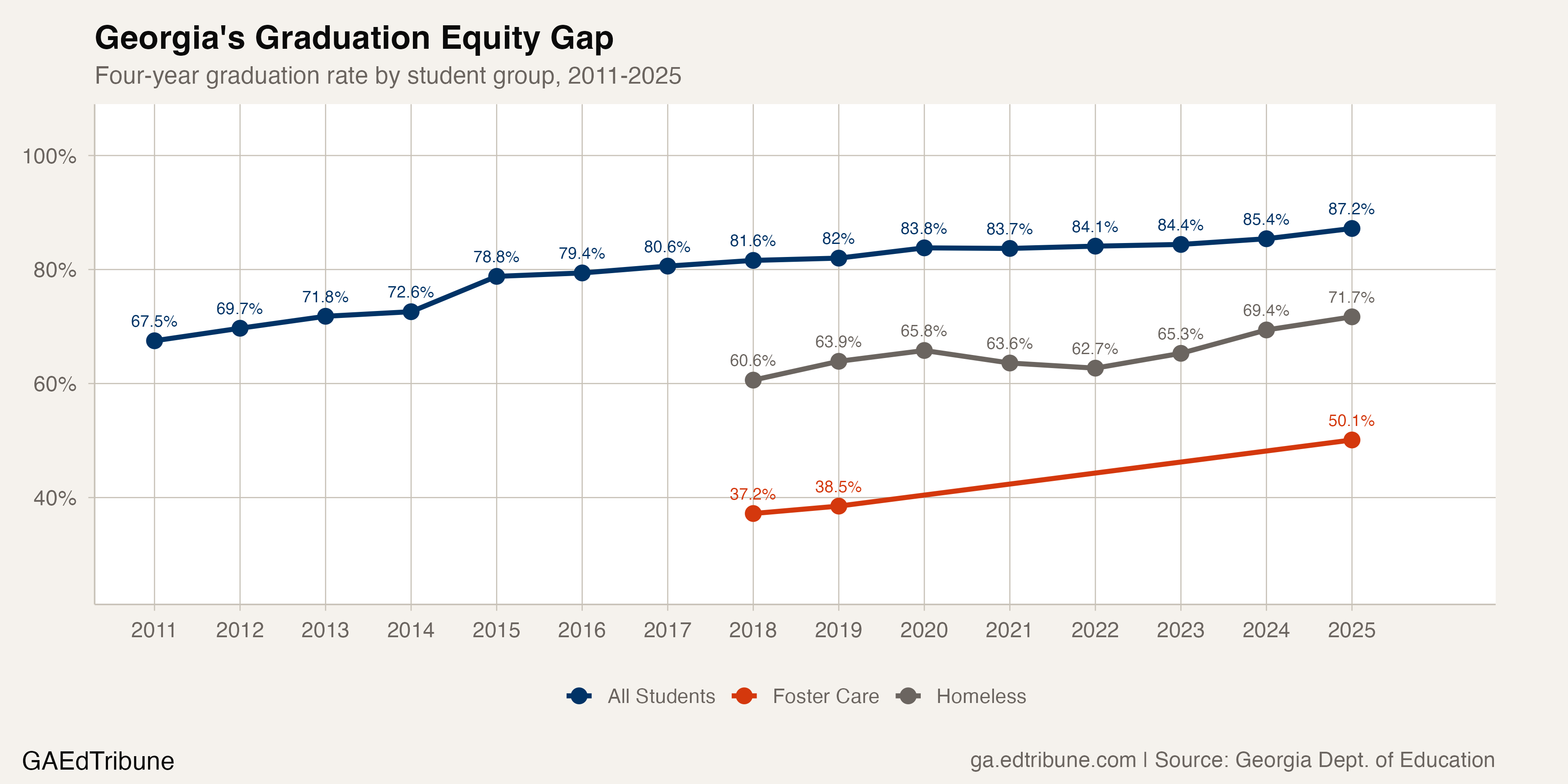
Georgia's foster care students graduate at 50.1%, 37 points below the state average and the lowest of any subgroup. Homeless youth face a similar gap.
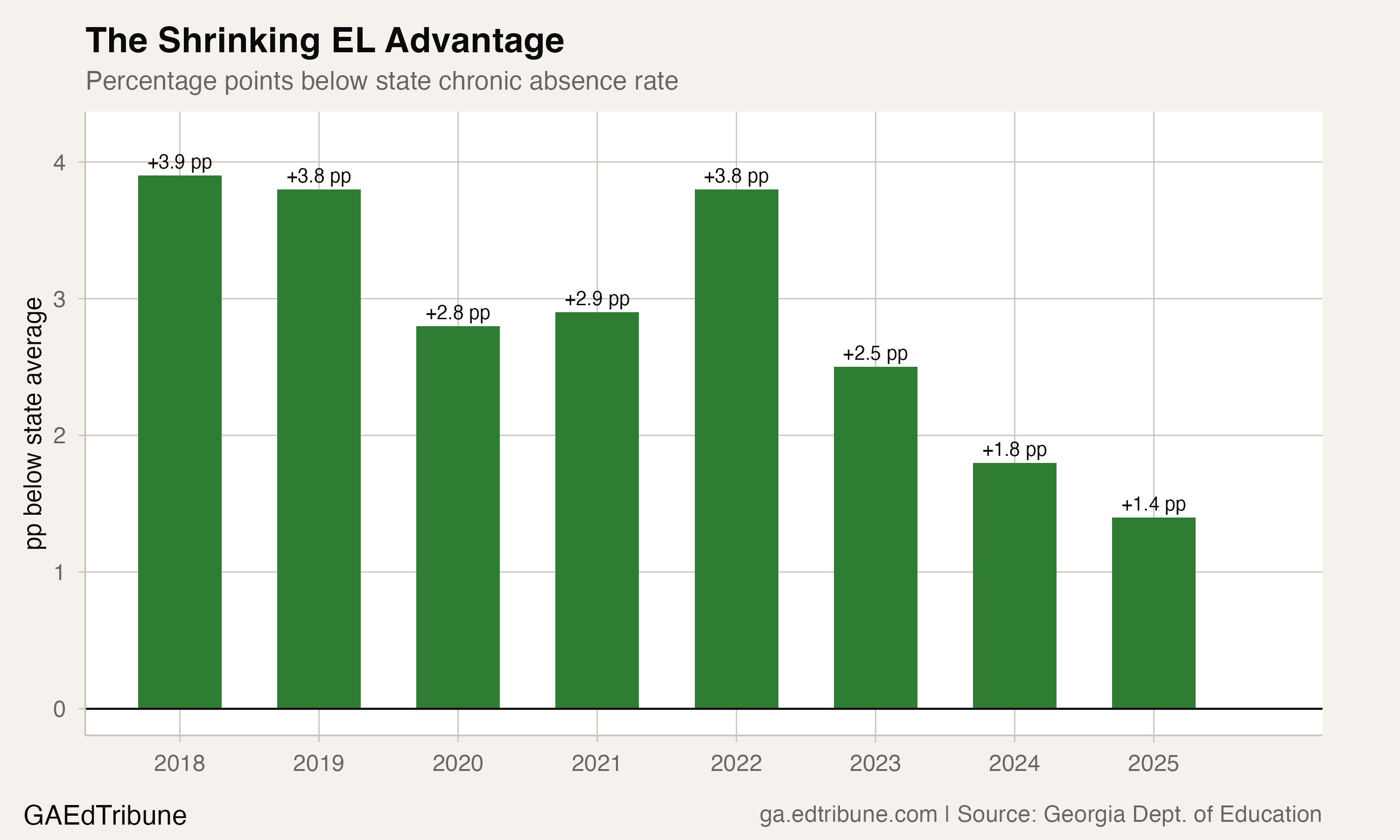
English learners had a 19.0% chronic absenteeism rate in 2025, 1.4 points below Georgia overall, but the gap has narrowed since 2018.
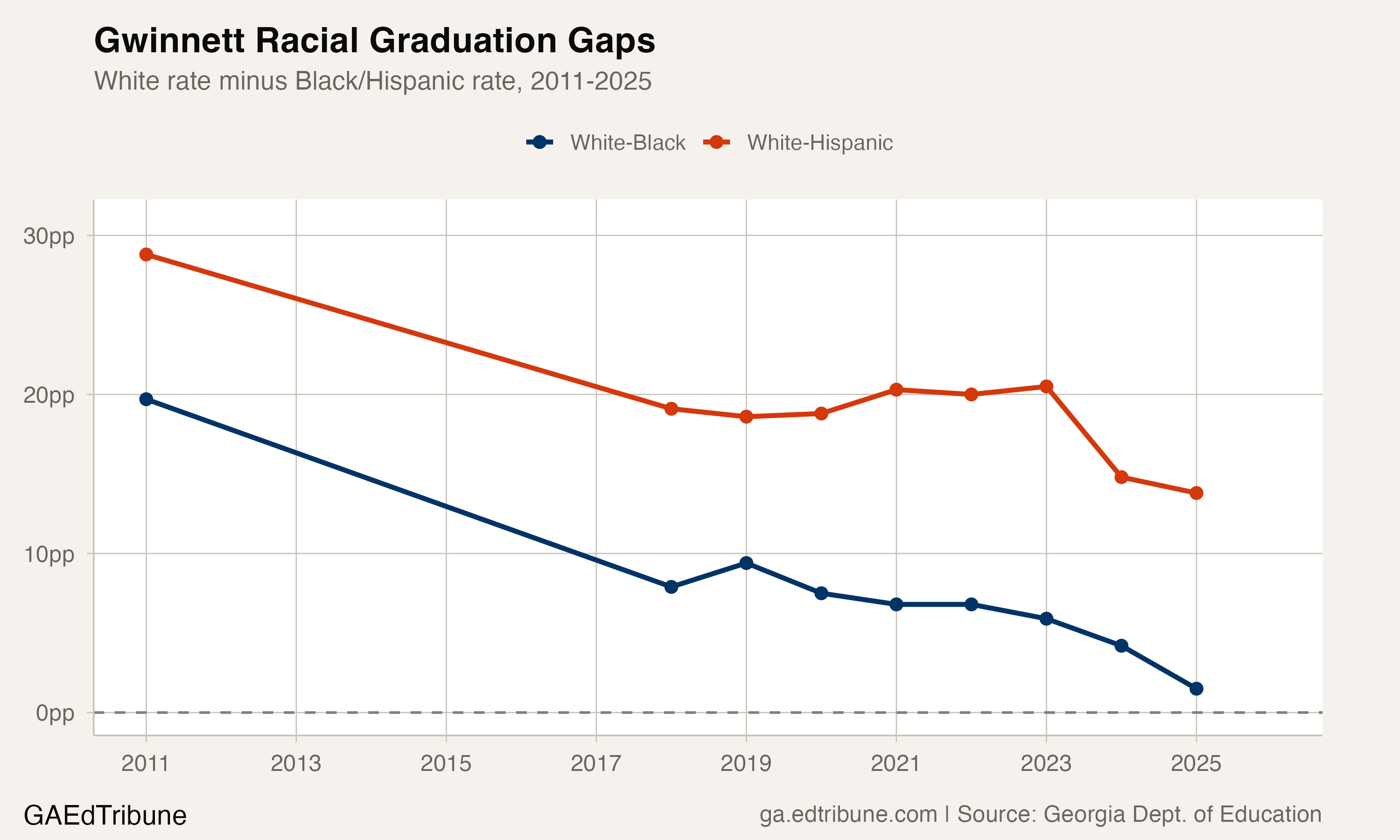
Georgia's largest district improved from 67.6% to 85.4% over 14 years while its cohort grew by 3,320 students and became majority-minority.
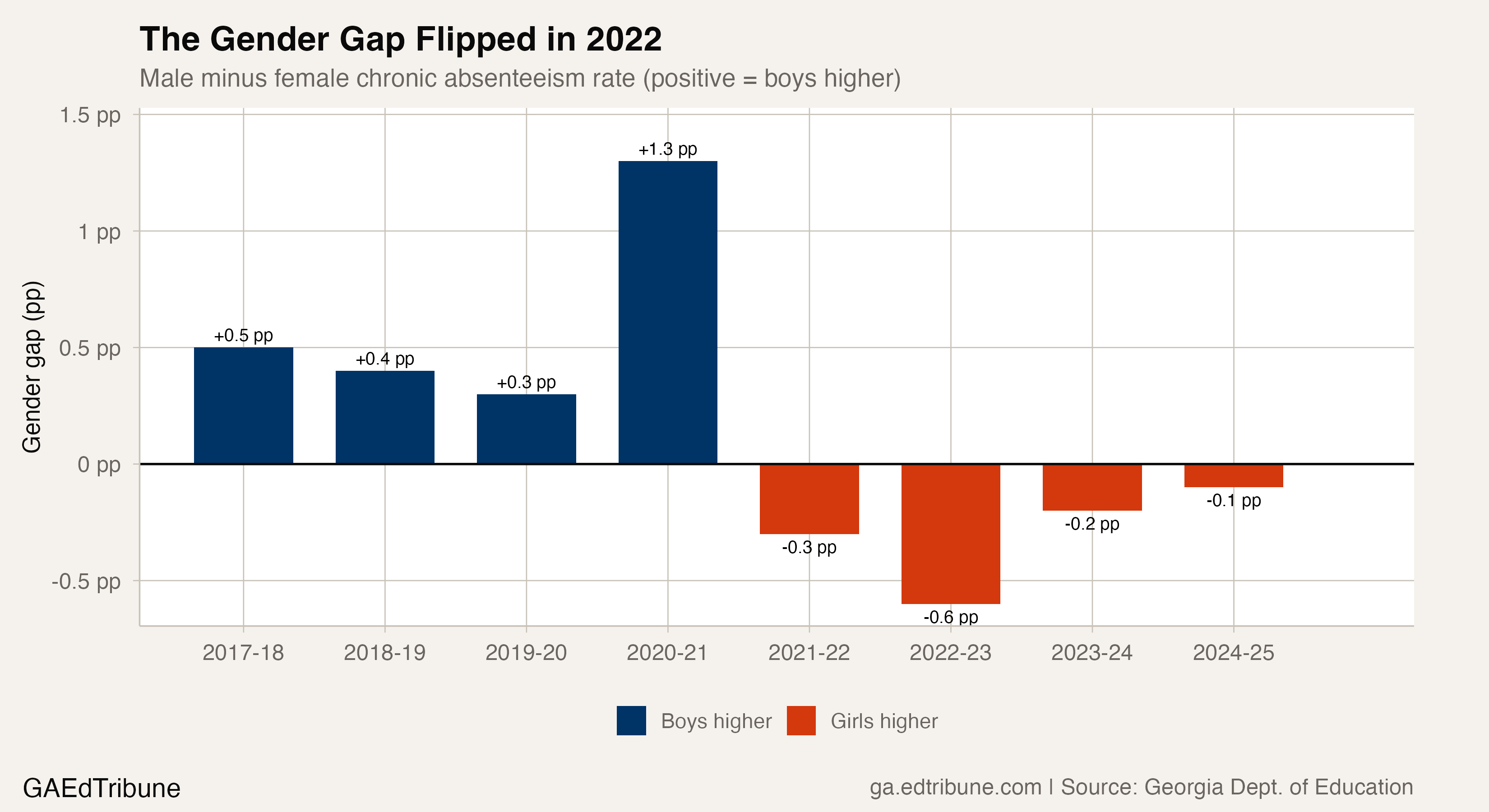
A longstanding pattern reversed in 2022: Georgia girls now have marginally higher chronic absenteeism than boys, and the gap has not closed.
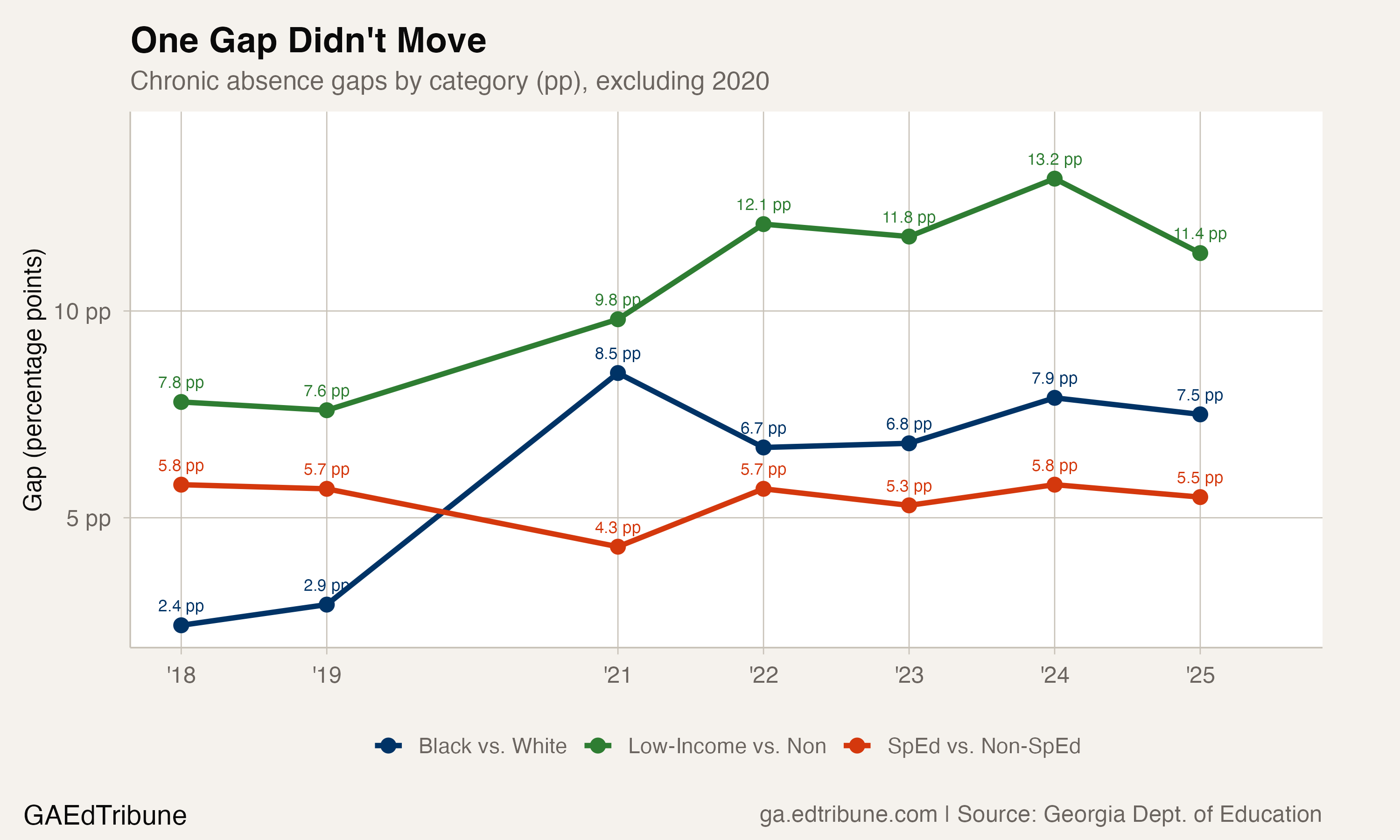
A quarter of Georgia's special education students are chronically absent, a gap that predates the pandemic and has barely moved in eight years.
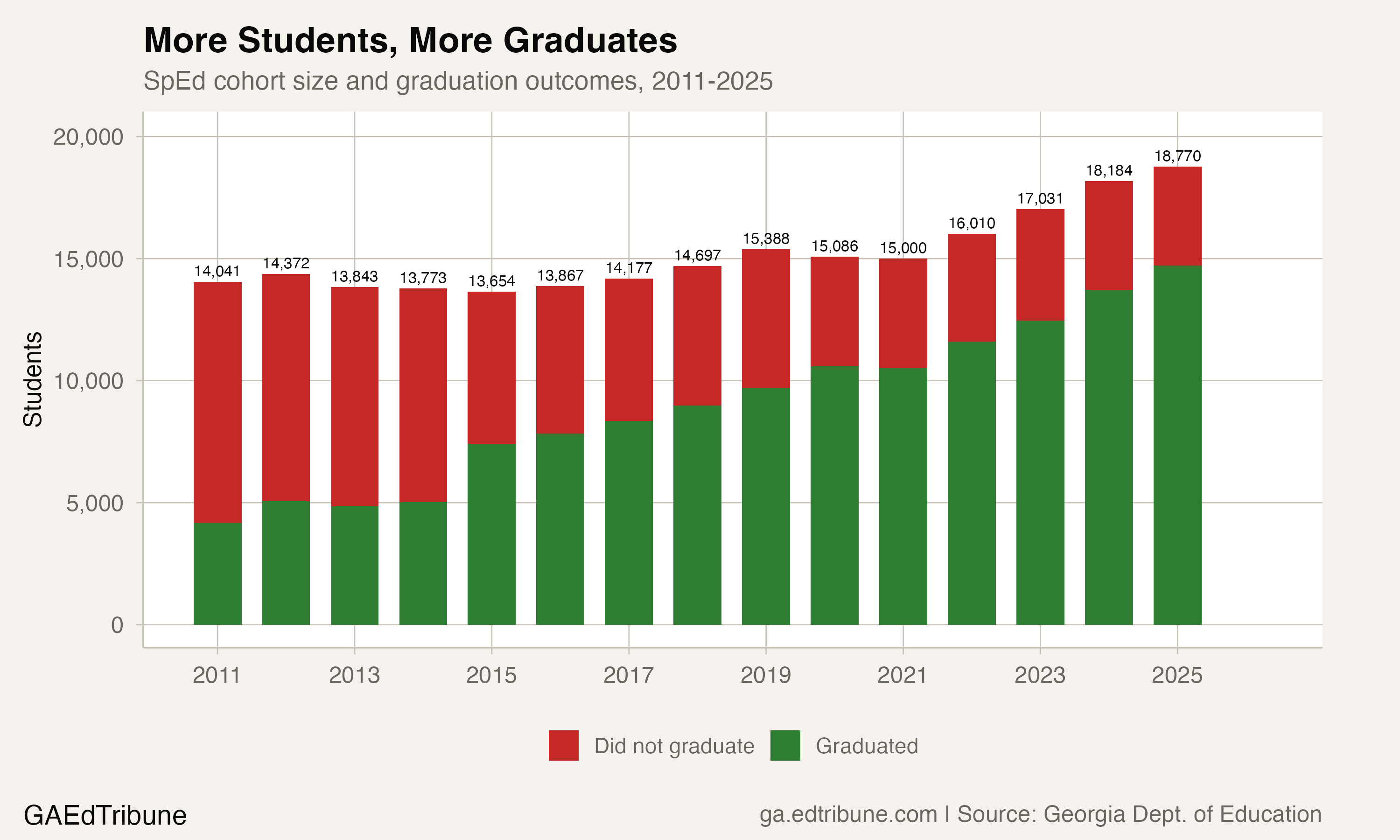
Georgia's special ed graduation rate rose from 29.8% to 78.4% in 14 years, the largest gain of any subgroup. The gap to peers shrank from 42 to 10 points.
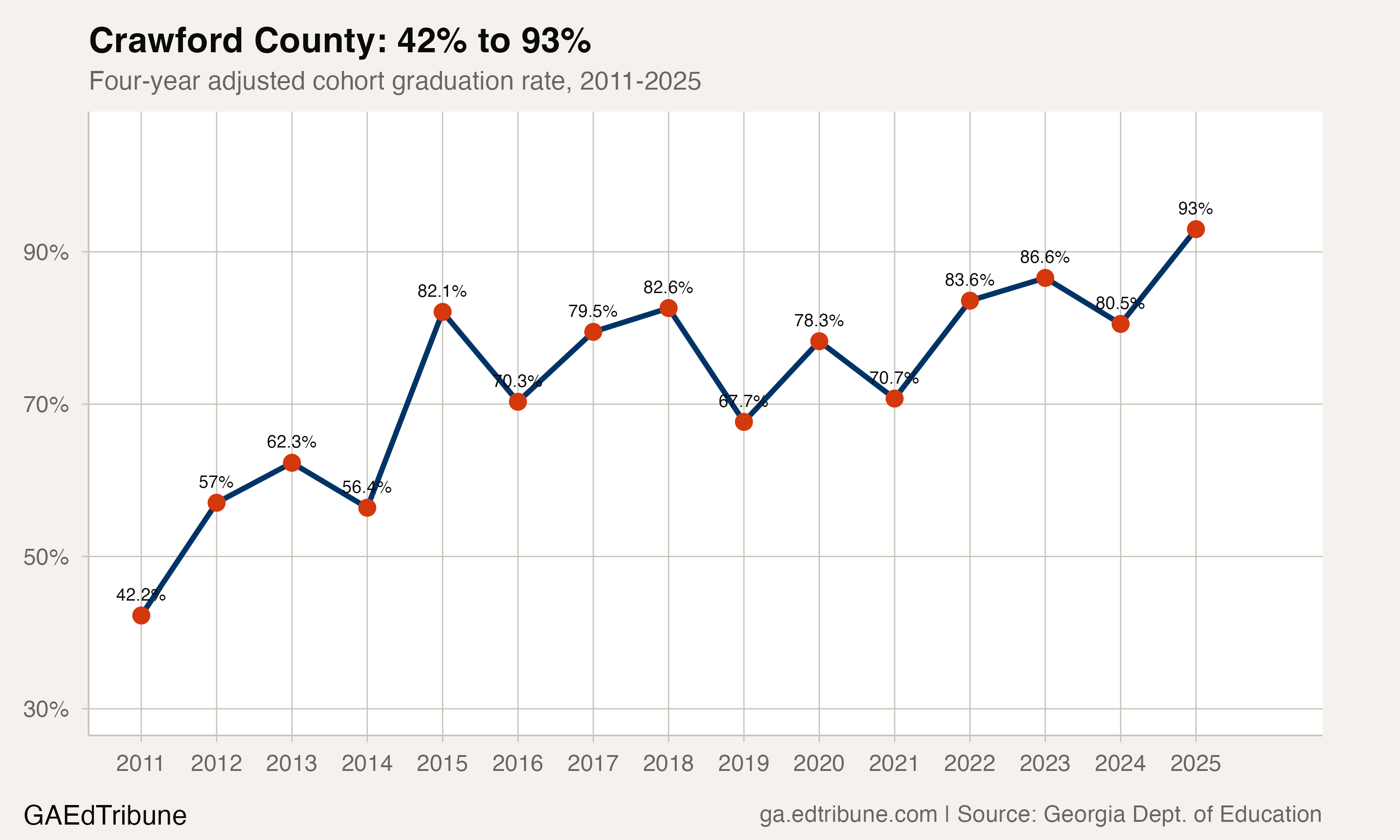
Crawford County posted a 50.7-point graduation rate gain since 2011, the second-largest in Georgia, one of 15 districts rising from below 60% to above 90%.
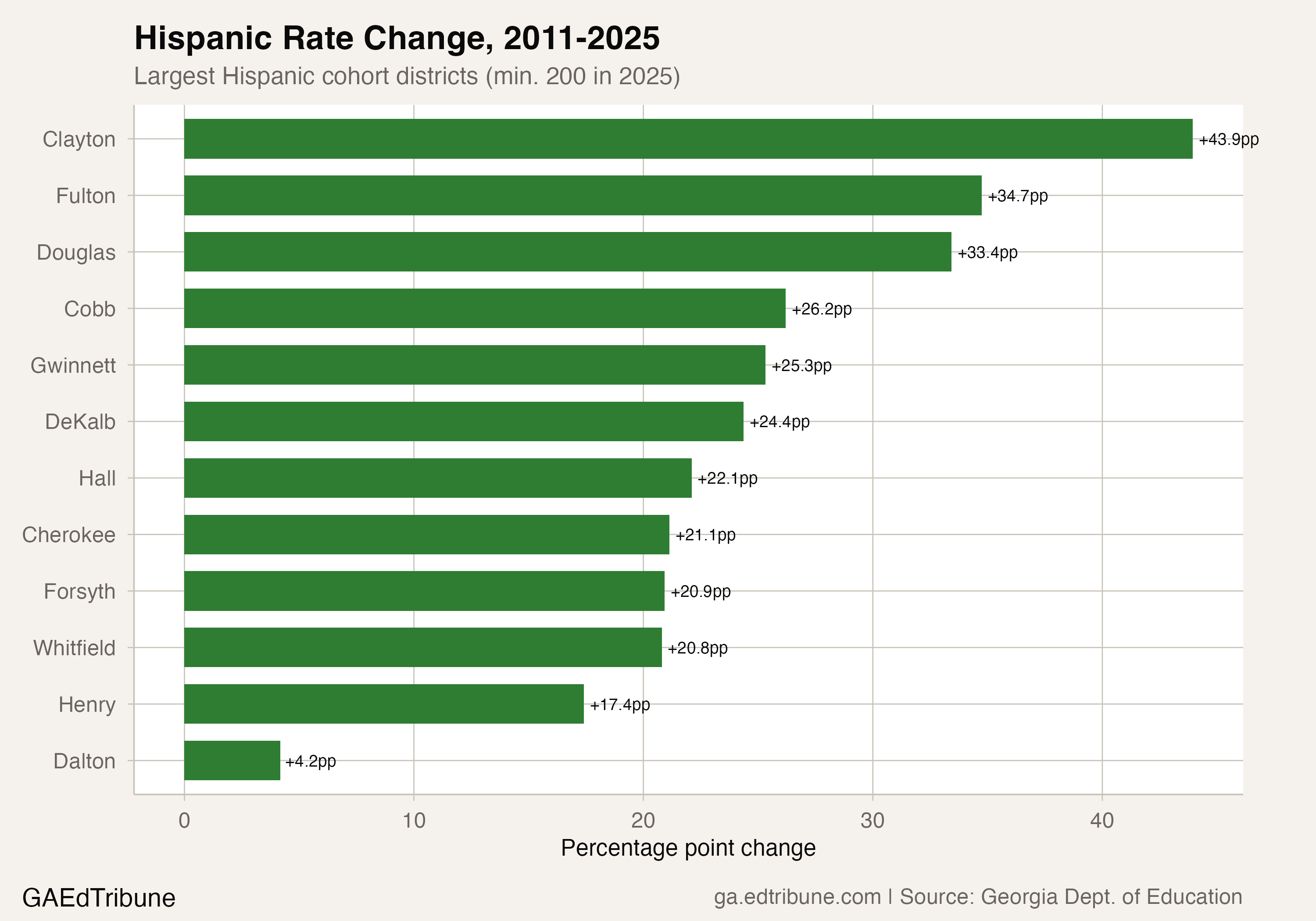
Georgia's Hispanic graduating class grew from 11,654 to 27,276 in 14 years while the graduation rate rose from 57.6% to 82.3%, producing 15,739 additional diplomas per year.
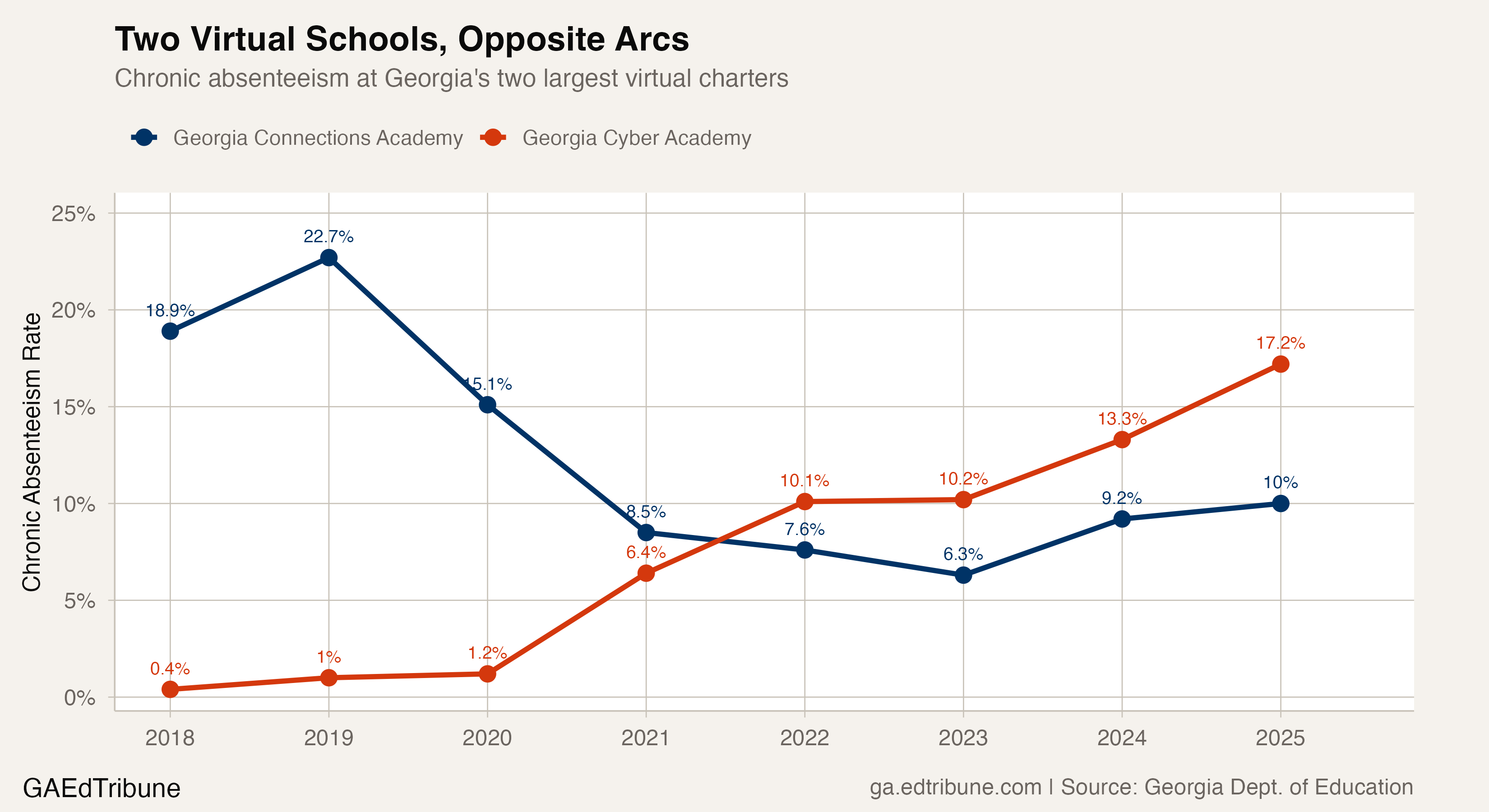
Georgia's largest virtual charter has seen chronic absenteeism rise every year since 2019, reaching 17.2% even as the state's rate fell.
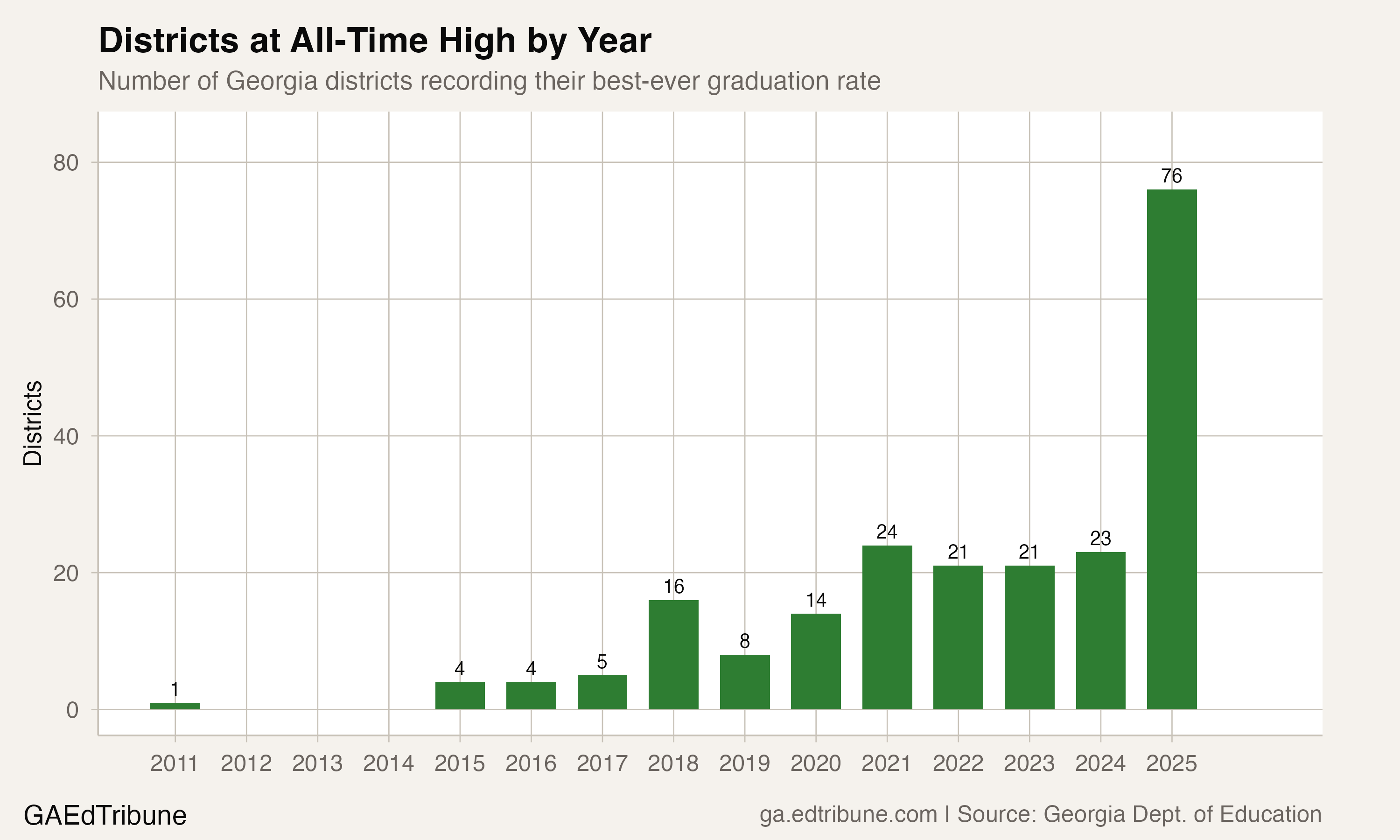
In 2025, 76 Georgia districts recorded their best-ever graduation rates while zero hit all-time lows, an unprecedented concentration of success across the state.